
Sailing Journal · First Passage
Thirty-eight miles, a curious seal, and the first real lesson in docking.
Breskens to Nieuwpoort – 38 Nautical Miles – By Ilse & Piet
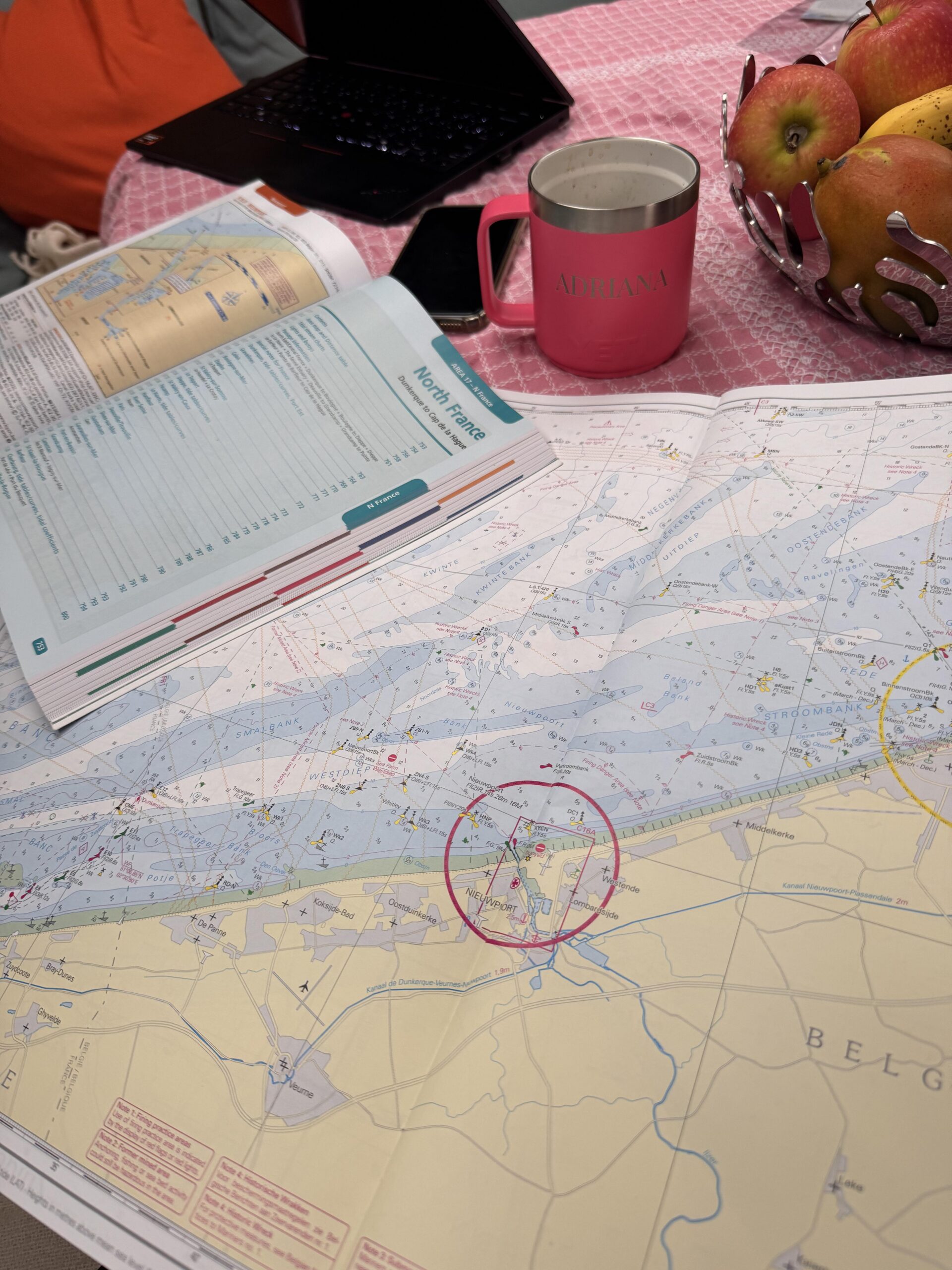
There is a particular kind of evening that every sailor knows: charts open, tide tables out, the kettle going cold beside the laptop. That was ours the night before this trip — working out exactly when the tide would turn at Vlissingen, when the current would carry us west, and what time we needed to slip our lines in Breskens to make the most of it. This wasn’t a weekend potter to a nearby anchorage. This was Adriana’s first real passage, and we wanted to get it right.
| Distance 38 nautical miles Breskens → Zeebrugge → Oostende → Nieuwpoort | Wind SW veering W, 5–16 knots Close-hauled for much of the way |
| Sea state 0.2 metres Flat calm, good visibility | Estimated duration Approximately 7 hours Reality had other plans |
The plan itself was almost a small piece of engineering. High water at Vlissingen, plus two hours and forty minutes, marks the start of the favourable current running from Vlissingen toward Nieuwpoort — so we set our departure from Breskens marina for 06:30, aiming to be properly under sail by seven. With the current under us and a beam-to-close reach for most of the route, we expected to cover the distance in six and a half to seven hours, putting us into Nieuwpoort around two in the afternoon.
Down the Westerschelde
The early start paid off in one sense: the Westerschelde at dawn is a quiet, silvery kind of place. We kept Dual Watch running on the VHF, listened out on Channel 14 for Vlissingen traffic control, and threaded our way past the shallows of the Hooge Platen with the red buoys safely to starboard. The Breskens–Vlissingen ferry crossed ahead of us more or less on schedule, exactly as expected.
What we hadn’t quite bargained for was just how busy the shipping channel would be that morning. Commercial traffic bound for and from Antwerp kept us on our toes, and we found ourselves tacking more than planned to stay clear and keep a respectful distance. It made for a properly attentive first hour or two — good practice, if a slightly busier one than the passage plan had suggested.
Past Zeebrugge, Under Sail
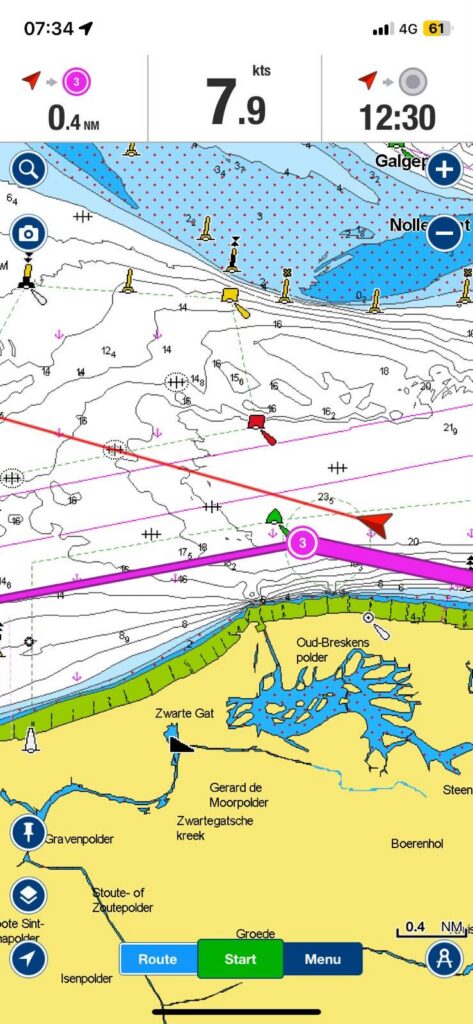
Zeebrugge asked for a bit more discipline: we switched to Channel 69 for Zeebrugge Traffic Centre well before the harbour markers came into view, called ahead to check whether any inbound or outbound traffic needed priority. Once we’d cleared the safe water mark on the far side, the wind let us sail close-hauled almost continuously, all the way past Oostende. That stretch, once the harbour traffic was behind us, was the passage at its best.
” Once Zeebrugge was behind us, we could sail hard on the wind the rest of the way — and somewhere off Oostende, a rather curious seal came to see what all the fuss was about.
A Visitor Off Oostende
Sailing along the Wenduine Bank with the cardinal marks off Oostende for company, we had company of another kind too: a seal, clearly intrigued by the boat, surfacing again and again nearby to take a good look at us before disappearing back under. It’s the sort of small moment that doesn’t show up in any passage plan, and it was easily one of the nicest parts of the day.
A Change of Route Near the Banks
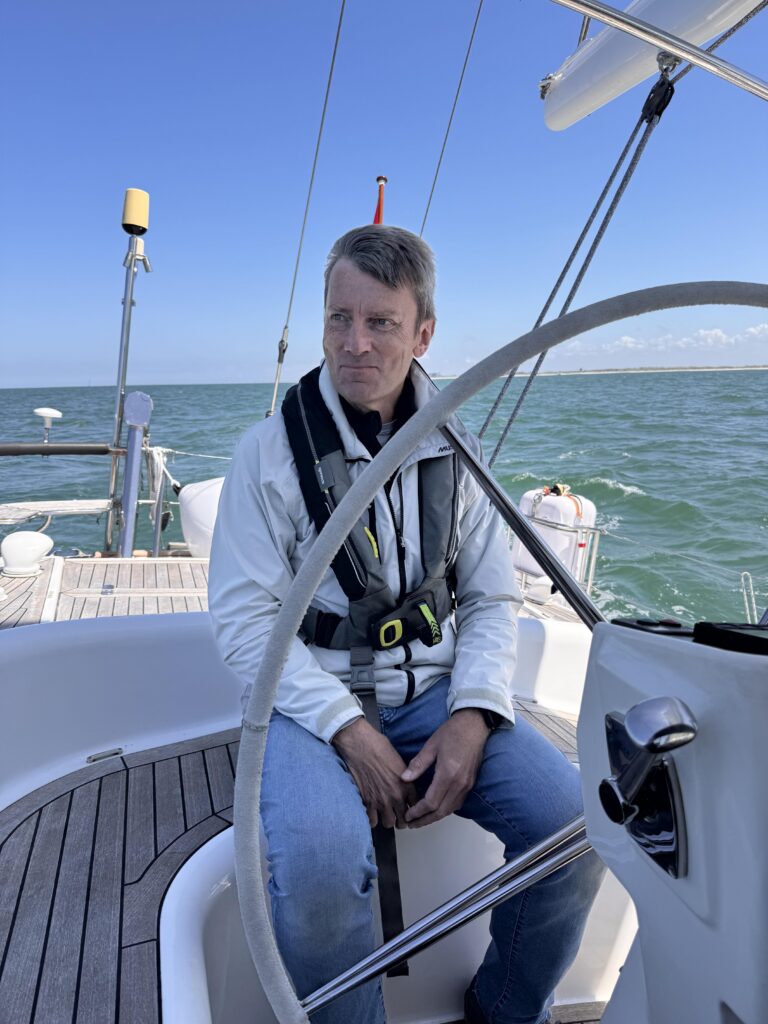
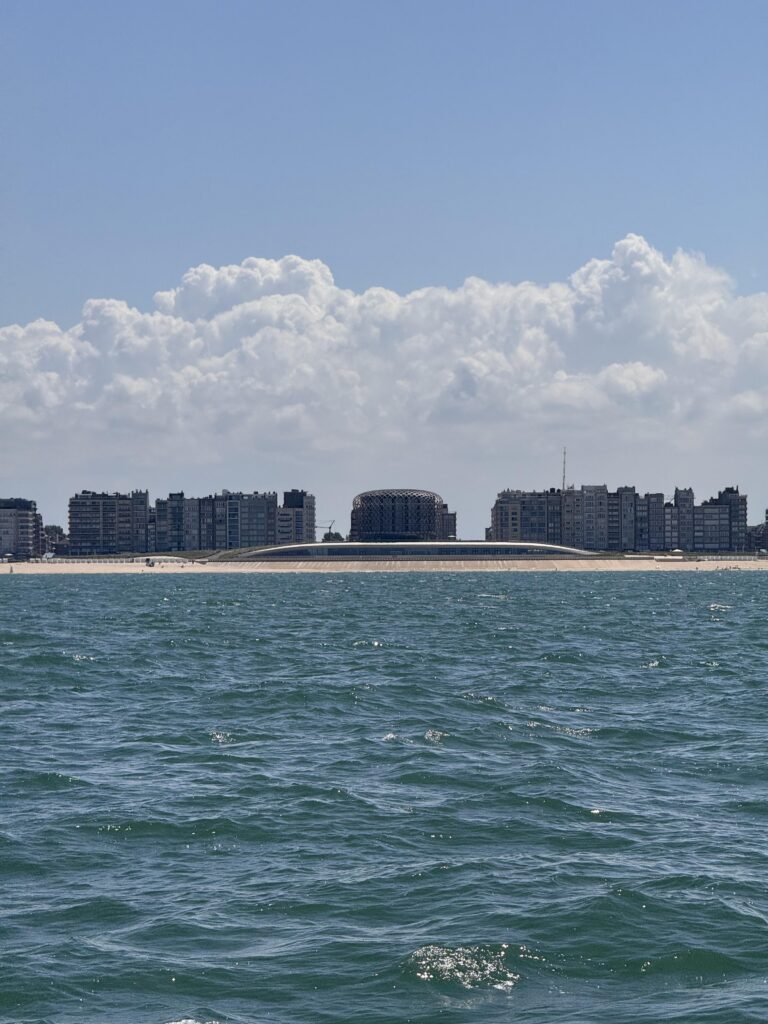
The original routing, taken from PredictWind, had us following a particular line past Oostende toward Nieuwpoort — but that track crossed the Baland Bank, a shallow patch with only four to six metres of water. Rather than push on regardless, we chose to sail closer inshore instead, following the Stroombank between Oostende and Nieuwpoort. It turned out to be a genuinely pleasant stretch of sailing, hugging the coast past Middelkerke with Cardinal Mark WK4 ahead as our waypoint before we struck the sails and turned into Nieuwpoort’s harbour channel.
Nieuwpoort — and an Honest Lesson
By the time we called Airforce Yacht Club on Channel 72 and lined up for our reserved berth at the head of pontoon C, the passage had taken about eight and a half hours rather than seven — roughly ninety minutes longer than planned. Some of that was simply not accounted for in the original estimate: half an hour spent working into the harbour channel at Nieuwpoort, and another quarter of an hour getting clear of Breskens at the start. The rest came from all that extra tacking in the busy Westerschelde.
The docking itself, we’ll admit honestly, did not go entirely to plan. There was real hesitation about exactly where to stand to get the spring line over the cleat on the pontoon, and our approach speed could comfortably have come down a notch or two. We took one useful rule away from it for next time: whoever throws a line is the one who then makes it fast. Simple, obvious in hindsight, and exactly the kind of thing you only learn by getting it slightly wrong the first time.
Also worth noting
The genoa couldn’t unfurl fully because of large vertical wrinkles, which meant we were sailing without full use of it for the whole passage. Nothing dramatic, but it’s going on the list to investigate properly before the next trip.
Provisions Worth Mentioning
No passage report would be complete without the food. The muesli bars did their job admirably, but it was Ilse’s sandwiches that got the real praise on board — properly, thoroughly delicious, and exactly what you want to be handed on watch with the coast sliding by.
What We’re Taking Forward
- Investigate why the genoa has wrinkles when fully unfurled
- Build in extra time for busy shipping lanes and harbour entries
- Practise docking approaches — speed and line-handling roles, in that order
- Keep an eye out for that seal next time we’re off Oostende
⚓
Not a flawless passage, but a real one — thirty-eight miles, one curious seal, and a docking story we’ll happily tell against ourselves. Very much for repeating.